
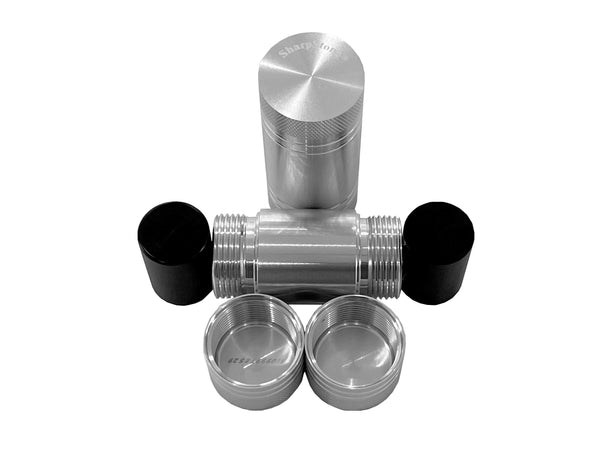
Pollen compressors make it easier to collect and process pollen by helping it to compress them into manageable forms. Compressing also helps in preserving their quality and easy handling.
What are pollen compressors meant for?
Pollen compressors are meant to compress collected pollen into manageable forms for storage, transport, processing, or commercial use. These machines help maintain product consistency, reduce waste, and improve operational efficiency. As technology advances, modern pollen compressors are becoming smarter, faster, and more adaptable to various personal and professional uses.
What are pollen compressors actually?
Pollen compressors are simple machines used to compress pollens in pellets, cakes, tablets, or blocks. Compression makes it easier to handle the materials while also ensuring safe packaging, and preservation. It also reduces contamination risks.
Where are these pollen compressors used in?
These machines are highly demanded for a variety of applications across:
· Botanical laboratories
· Herbal supplement manufacturing
· Cannabis and hemp processing
· Research and breeding facilities
The machine applies controlled pressure to pollen materials, transforming them into a denser and more stable form without damaging their essential properties.
Why pollen compression holds significance?
Raw pollen is delicate, lightweight, so quite difficult to manage in large quantities. Lack of proper processing for longer even leads to losing potency due to exposure to moisture, contamination, or oxidation.
Pollen compression provides an effective solution by solving all these problems. It holds significance for:
· Improving storage efficiency
· Extending shelf life
· Simplifying transportation
· Reducing airborne pollen loss
· Maintaining cleanliness during handling
· Supporting accurate dosage and packaging
· Enhancing commercial product consistency
Individuals and professionals who work with pollen materials, compression provides an effective technology that improves their experience.
Are there different types of pollen compressors?
Yes, there are many types of pollen compressors in use, and selection depends on production scale, material sensitivity, and operational goals. These are:
Manual compressor
As expected, these are hand-operated machines designed for small-scale operations or laboratory environments. They are ideal for research purposes, hobbyists, and low-volume production. They are preferred for their:
· Compact design
· Affordability
· Ease of maintenance
· Precise performance
Hydraulic compressors
Advanced compressors use fluid pressure technology to generate strong and consistent compression force. These are used most widely in commercial facilities. Key features are:
· High compression capacity
· Consistent pressure application
· Suitable for large-scale production
· Durable make
Pneumatic systems
They use compressed air to perform the compression process. These machines are popular for operations that require cleaner and faster production cycles. They are known for:
Faster operation
· Lower maintenance requirements
· Cleaner processing environment
· Energy-efficient performance
Automatic compressors
These are automated machines and integrate digital controls, programmable settings, and smart monitoring systems. Key features are:
· Automated pressure control
· Touchscreen interfaces
· Production monitoring
· Reduced manual labor
Are there portable models too?
Yes, there are portable pollen compressors, which are designed for on-the-go use. They are suitable for travels and on-demand preparation.
What are the advantages of modern pollen compressors?
They provide several advantages, such as:
· Improved production efficiency
· Better material preservation
· Consistent output quality
· Reduced product loss
· Cleaner processing environment
· Lower labor requirements